
Your Garage Door Springs Are Doing More Work Than You Think
Every time you open or close your garage door, the springs are doing the heavy lifting — literally. A standard residential garage door weighs between 130 and 350 pounds, and it's the springs that counterbalance all that weight so your opener doesn't have to do it alone. Over time, those springs wear out, and when they fail, it's not just inconvenient — it can be dangerous.
If you're a homeowner in Rockledge, FL, understanding the lifespan of your garage door springs and knowing when to replace them can save you from unexpected breakdowns, costly emergency repairs, and potential safety hazards. Let's break down everything you need to know.
How Long Do Garage Door Springs Typically Last?
Garage door springs are rated by cycle life, not by years. One cycle equals one full open-and-close of the door. Here's what you can generally expect:
- Standard torsion springs: 10,000 cycles, which translates to roughly 7–10 years for a household that uses the garage door 3–4 times per day.
- High-cycle torsion springs: 20,000–30,000 cycles or more, potentially lasting 15–20 years depending on usage.
- Extension springs: Typically rated for around 10,000 cycles, though they tend to wear less evenly than torsion springs.
Of course, these are estimates. Factors like humidity, salt air exposure, and temperature fluctuations — all common along the Space Coast — can shorten the lifespan of your springs. Rockledge's coastal climate means metal components are more susceptible to corrosion, which can weaken springs faster than you'd expect.
Torsion Springs vs. Extension Springs: What's the Difference?
Before we go further, it helps to understand the two main types of garage door springs:
Torsion Springs
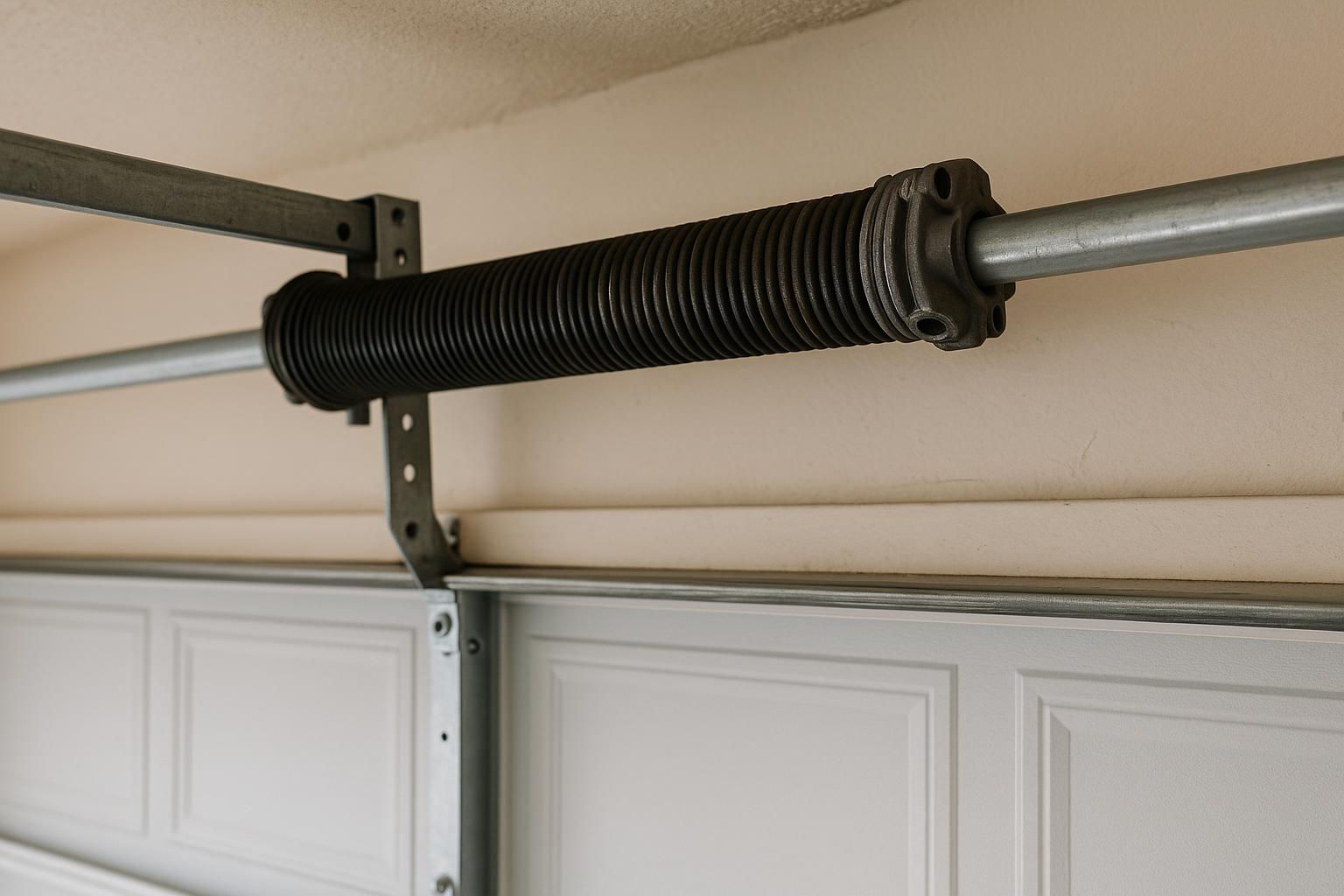
These are mounted horizontally above the garage door opening. They use torque to lift the door and are generally considered the safer, more durable option. Most modern garage doors in Rockledge and the surrounding areas use torsion springs.
Extension Springs
These run along the horizontal tracks on either side of the door. They stretch and contract to provide lifting force. Extension springs are more common on older or lighter doors, but they can be more dangerous when they break because they're under significant tension and can snap violently if not equipped with safety cables.
If your home still uses extension springs without safety cables, we strongly recommend having a professional install them — or upgrading to a torsion spring system altogether.
Warning Signs Your Garage Door Springs Are Wearing Out
Springs rarely fail without warning. Here are the telltale signs that your springs are nearing the end of their life:
- The door feels heavier than usual: If your garage door seems harder to lift manually, the springs are losing their tension.
- The door opens unevenly: One side rising faster than the other can indicate that one spring is weaker or has already broken.
- Visible gaps in the spring coils: A torsion spring that's stretched or has a visible gap in the coils is broken or close to breaking.
- Loud bang from the garage: Many homeowners describe hearing a loud pop or bang — that's often the sound of a spring snapping. If this happens, do not try to operate the door.
- The opener struggles or stops working: Your garage door opener is designed to move a counterbalanced door. If the springs aren't doing their job, the opener has to work much harder, which can burn out the motor.
- The door won't stay open: A door that slowly slides closed or won't stay in the open position is a classic sign of spring failure.
Can You Replace Garage Door Springs Yourself?
This is one of the most common questions we hear, and the answer is straightforward: we don't recommend it. Garage door springs are under extreme tension. A torsion spring that snaps during a DIY replacement can cause serious injury or even death. Every year, emergency rooms across the country treat people who were injured attempting to replace their own springs.
Professional technicians have the specialized tools, training, and experience to replace springs safely. At Rockledge Garage Door, our technicians handle spring replacements every day, and we always prioritize safety — both ours and yours.
Should You Replace Both Springs at the Same Time?
If your garage door has two torsion springs (which is common for double-wide doors), we always recommend replacing both at the same time, even if only one has broken. Here's why:
- Both springs have the same age and wear. If one has failed, the other is likely close behind.
- Mismatched springs cause uneven tension. A new spring paired with a worn spring can make the door open unevenly and put extra strain on the opener.
- It saves money in the long run. The labor cost is the same whether we replace one or two springs. Replacing both now avoids paying for a second service call in a few months.
How to Extend the Life of Your Garage Door Springs
While springs will eventually wear out no matter what, regular maintenance can help you get the most out of them. Here are a few tips for Rockledge homeowners:
- Lubricate the springs regularly. Apply a silicone-based or white lithium grease spray to your springs every 3–4 months. This reduces friction and helps prevent rust — especially important in our humid Florida climate.
- Schedule annual maintenance. A professional tune-up includes checking spring tension, inspecting hardware, lubricating moving parts, and testing safety features. Think of it like an annual checkup for your garage door.
- Don't ignore small problems. A squeaky spring, a slightly uneven door, or an opener that seems to be working harder than usual are all early warning signs. Addressing them early can prevent a full failure.
- Consider upgrading to high-cycle springs. If you use your garage door frequently — many families in Rockledge use the garage as their primary entrance — high-cycle springs are a worthwhile investment.
What to Do When a Spring Breaks
If you hear that telltale bang or notice your door isn't operating correctly, here's what to do:
- Stop using the door immediately. Don't try to open or close it with the opener or manually.
- Disconnect the opener. Pull the emergency release cord to disengage the opener from the door.
- Call a professional. A broken spring needs to be replaced before the door can be safely used again.
We offer emergency garage door service throughout Rockledge, Cocoa, Merritt Island, Viera, Melbourne, and Cocoa Beach, so you're never stuck waiting long with a non-functioning garage door.
Get Your Springs Inspected Before They Fail
The best time to deal with a garage door spring problem is before it becomes an emergency. If your springs are more than seven years old, or if you've noticed any of the warning signs we've discussed, it's worth having a professional take a look.
At Rockledge Garage Door, we provide honest assessments and upfront pricing — no surprises. Whether you need a simple inspection, a spring replacement, or a full preventive maintenance visit, our team is here to keep your garage door running safely and smoothly. Give us a call today to schedule your appointment.