
That Frustrating Moment When Your Garage Door Won't Stay Closed
You press the button on your garage door remote, watch the door start its descent, and then — just before it reaches the floor — it reverses and goes right back up. You try again. Same result. It's one of the most common and frustrating garage door problems homeowners in Rockledge deal with, especially as our humidity and temperature swings take a toll on garage door components throughout the year.
The good news is that this reversing behavior is actually a safety feature working as intended. The bad news is that something is triggering it incorrectly. Let's walk through the most common reasons your garage door reverses before closing completely and what you can do about each one.
Understanding Your Garage Door's Safety Systems
Before diving into causes, it helps to understand why your garage door is designed to reverse in the first place. Federal law has required garage door openers manufactured after 1993 to include two key safety mechanisms:
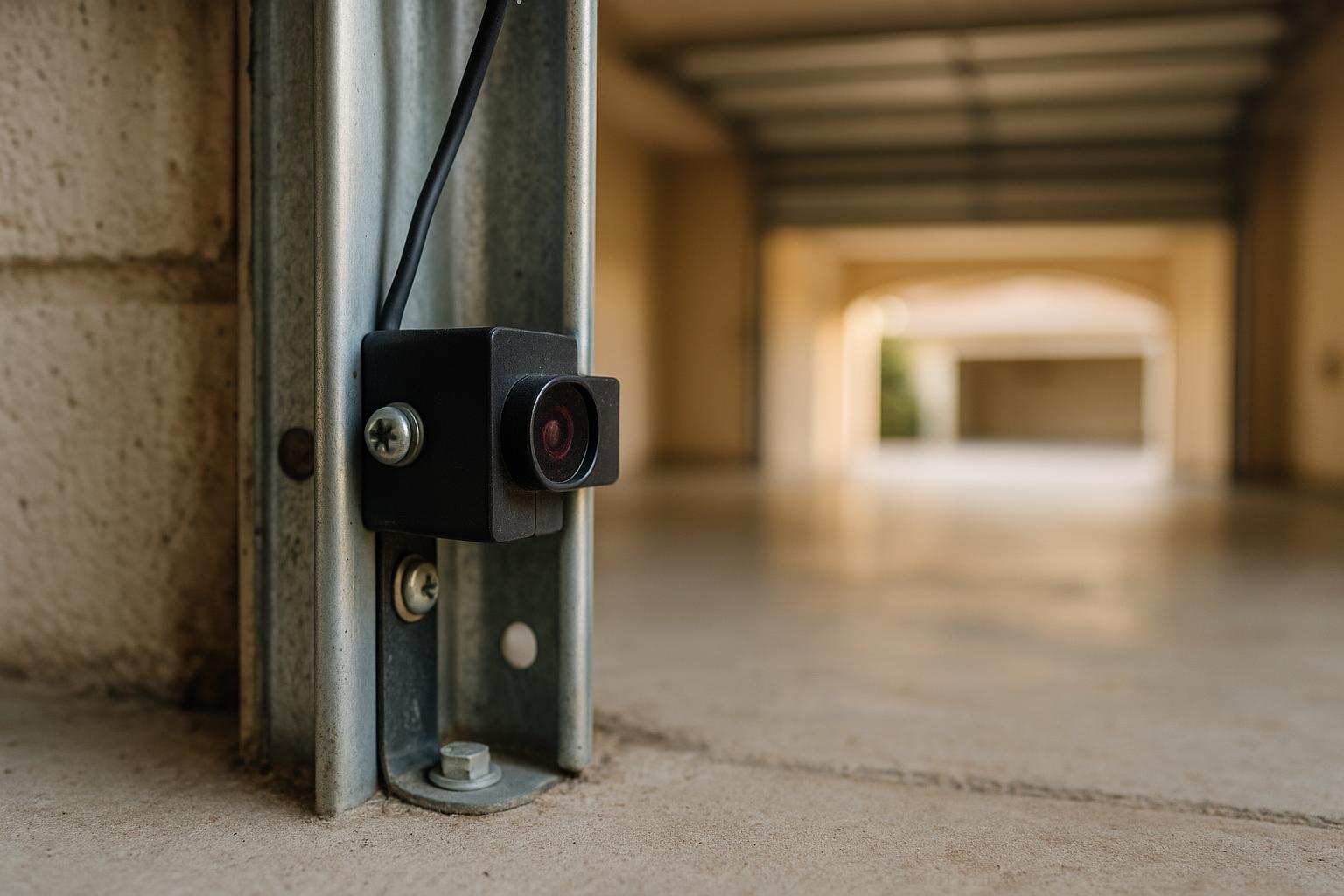
- Photo-eye sensors: These are the small sensors mounted near the bottom of your garage door tracks on either side. They project an invisible beam across the door opening. If anything breaks that beam while the door is closing, the door reverses immediately.
- Auto-reverse mechanism: If the door encounters physical resistance while closing — like hitting an object or the floor with too much force — it automatically reverses direction.
Both systems exist to prevent the door from closing on a person, pet, or object. When your door reverses unexpectedly, one of these systems is almost always involved.
Common Cause #1: Misaligned Photo-Eye Sensors
This is the number one reason garage doors reverse before reaching the ground, and it's especially common here in Rockledge where lawn care activity, kids playing in driveways, and even minor vibrations from nearby traffic on US-1 can bump sensors out of alignment.
Your photo-eye sensors need to be pointed directly at each other to maintain their invisible beam. Even a slight shift of a fraction of an inch can break the connection and make your opener think something is in the way.
How to Check
Look at both sensors near the base of your door tracks. Most models have a small LED light on each unit. Typically, one light should be green (sending) and one should be green or amber (receiving). If either light is blinking or off, the sensors are likely misaligned or malfunctioning.
What You Can Do
Gently adjust the sensor brackets so both units face each other squarely. Tighten the wing nuts or screws that hold them in place. Clean the sensor lenses with a soft cloth — dirt, cobwebs, and the fine dust that blows in from Florida's sandy soil can obstruct the beam.
Common Cause #2: Dirty or Obstructed Sensor Lenses
Even if your sensors are perfectly aligned, dirty lenses can weaken the beam enough to cause intermittent reversing. In our humid Space Coast climate, condensation can form on sensor lenses early in the morning, and pollen buildup during spring months is another frequent culprit.
A quick wipe with a clean, dry microfiber cloth often solves the problem instantly. Make this part of your regular garage maintenance routine, especially during Rockledge's pollen-heavy months from February through May.
Common Cause #3: Incorrect Close-Limit Settings
Your garage door opener has adjustable settings called travel limits that tell the motor exactly how far the door should move when opening and closing. If the close-limit setting is off, the opener may think the door has hit an obstruction when it's actually just reaching the floor. The auto-reverse kicks in, and the door goes back up.
How to Check
Watch your door carefully as it closes. If it touches the ground and then reverses, the close limit is likely set too far, causing the opener to push the door into the floor and interpret that resistance as an obstruction.
What You Can Do
Most openers have limit adjustment screws on the back or side of the motor unit. Consult your owner's manual for the specific location and turn the close-limit screw in small increments. This is a trial-and-error process — adjust slightly, test, and repeat until the door closes fully without reversing. If you're not comfortable making these adjustments, a professional can dial in the settings quickly.
Common Cause #4: Damaged or Worn Tracks
Bent, dented, or misaligned tracks can create resistance as the door rollers travel through them. When the opener senses that extra friction, it may interpret it as an obstruction and reverse the door. Inspect your tracks visually for any obvious bends, gaps, or debris. Even a small pebble lodged in the track can cause enough resistance to trigger a reversal.
You can remove debris yourself, but bent tracks should be handled by a professional. Attempting to bend tracks back into shape without proper tools can make the problem worse or create a safety hazard.
Common Cause #5: Worn Springs or Cables
Your garage door's springs do the heavy lifting — literally. They counterbalance the weight of the door so the opener motor doesn't have to work as hard. When springs weaken or lose tension over time, the door becomes heavier for the opener to manage. The motor strains against the extra weight, and the safety system may interpret that strain as an obstruction.
If your door seems sluggish, hesitates during operation, or looks uneven when partially open, worn springs could be the underlying issue. Spring replacement is one repair that should always be left to trained professionals. The springs are under extreme tension and can cause serious injury if handled improperly.
Common Cause #6: Wiring Issues
Frayed, damaged, or loose wiring between the sensors and the opener can send inconsistent signals that cause erratic behavior, including unexpected reversals. Rodents, moisture exposure, and general wear can all compromise wiring over time. If you've checked everything else and the problem persists, a wiring issue may be to blame.
When to Call a Professional
Some of these fixes — cleaning sensors, removing track debris, or minor limit adjustments — are reasonable for handy homeowners to tackle. But if you've gone through the basics and your garage door still reverses before closing, it's time to bring in an expert. Persistent reversing can indicate multiple overlapping issues that require professional diagnosis.
Additionally, any repair involving springs, cables, or the opener's internal components should be handled by a trained technician for safety reasons.
Keeping Your Garage Door Reliable in Rockledge
Preventive maintenance goes a long way toward avoiding unexpected problems like a door that won't stay closed. A seasonal inspection that includes lubricating moving parts, checking sensor alignment, testing the auto-reverse function, and examining springs and cables can catch small issues before they become bigger headaches.
At Rockledge Garage Door, we help homeowners and businesses across Rockledge, Cocoa, Merritt Island, Viera, and Melbourne keep their garage doors operating safely and reliably. Whether you're dealing with a door that keeps reversing or you want to schedule preventive maintenance before a problem starts, our team provides honest assessments and fast, dependable service.
Don't let a malfunctioning garage door compromise your home's security or your daily routine. If your door is acting up, reach out to us and we'll get it sorted out.